Conveyor Belts

PTFE Mesh Conveyor Belts

Finished PTFE coated mesh belts for conveyors that need air to pass through the carrying surface. The belt is specified as an assembly: aperture, width, circumference, edge treatment and joint all affect how it runs.

  • Aperture options from fine mesh to 10 × 10 mm
  • Custom circumference and working width
  • Reinforced edges and equipment-specific joints
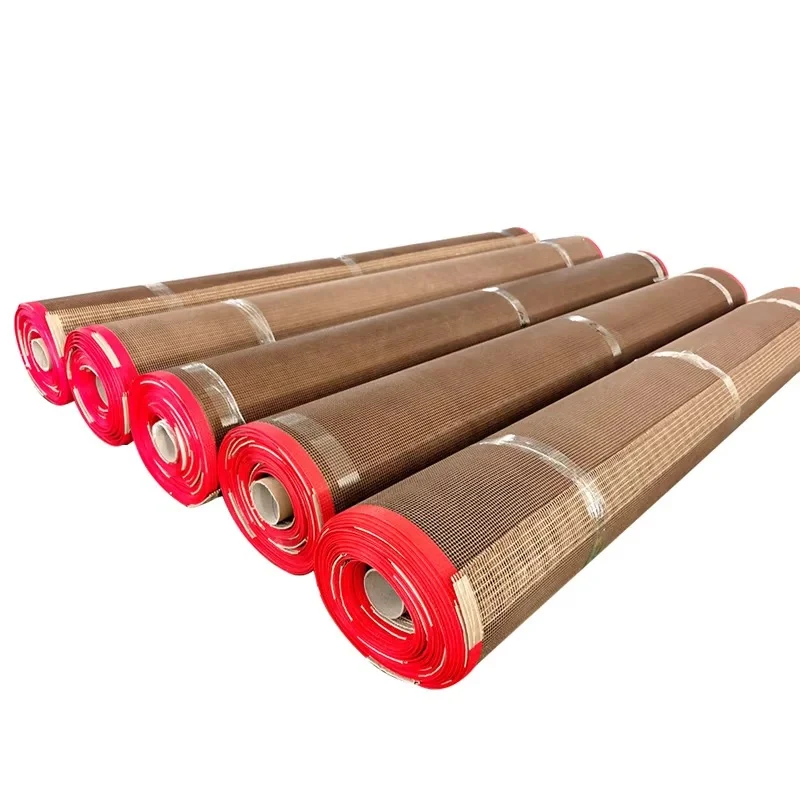
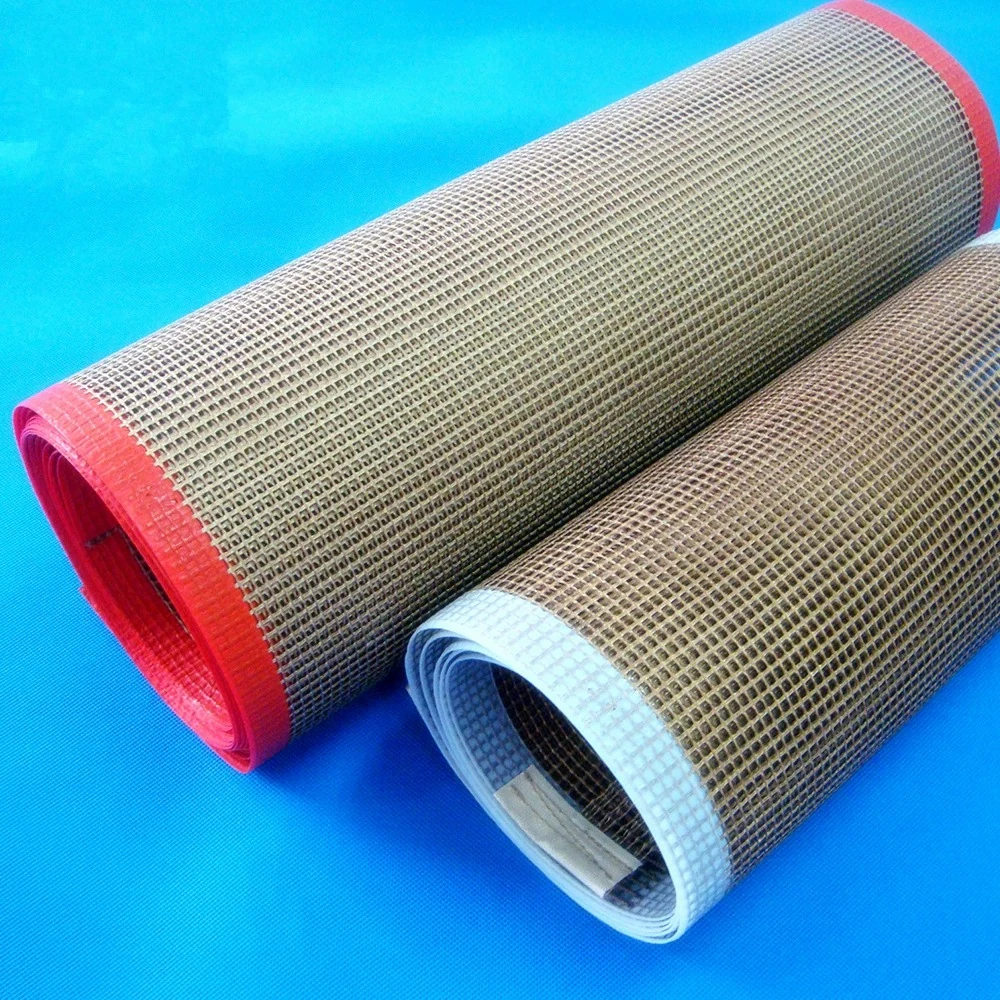
Fabricated brown mesh belts rolled with red reinforced edges
Finished mesh belt roll formats

Material & configuration

Product Specifications

Choose the construction and dimensions for the equipment and the material it handles.

PTFE Mesh Conveyor Belts specifications
Belt bodyPTFE coated woven fiberglass mesh
Mesh options0.5 × 0.5, 1 × 0.5, 1 × 1, 2 × 2.5, 4 × 4, 6 × 6 and 10 × 10 mm
Additional constructionsHeavier-yarn 4 × 4 and 2 × 2.5 mm mesh options
ColorsBrown and black configurations
Finished dimensionsEquipment-specific width and endless circumference or open length
FabricationEdge reinforcement, joint selection and tracking features

Select a specification

Standard Configurations

Select the mesh construction before specifying a finished belt. Each belt is sized and joined for the installed conveyor.

PTFE Mesh Conveyor Belts standard options and supply formats
Reference SKUSpecificationSupply formatSupply routeInquiry
CPT-MB-44-BR4 × 4 mm opening; brown; standard meshFinished belt to equipment dimensionsMade to orderQuote This Option
CPT-MB-66-BR6 × 6 mm opening; brown; standard meshFinished belt to equipment dimensionsMade to orderQuote This Option
CPT-MB-1010-BR10 × 10 mm opening; brown; standard meshFinished belt to equipment dimensionsMade to orderQuote This Option
CPT-MB-225-BR2 × 2.5 mm opening; brown; standard meshFinished belt to equipment dimensionsMade to orderQuote This Option
CPT-MB-11-BR1 × 1 mm opening; brown; standard meshFinished belt to equipment dimensionsMade to orderQuote This Option
CPT-MB-105-BR1 × 0.5 mm opening; brown; standard meshFinished belt to equipment dimensionsMade to orderQuote This Option
CPT-MB-0505-BR0.5 × 0.5 mm opening; brown; standard meshFinished belt to equipment dimensionsMade to orderQuote This Option
CPT-MB-44-BK4 × 4 mm opening; black; standard meshFinished belt to equipment dimensionsMade to orderQuote This Option
CPT-MB-44-H4 × 4 mm opening; brown; heavier-yarn meshFinished belt to equipment dimensionsMade to orderQuote This Option
CPT-MB-225-H2 × 2.5 mm opening; brown; heavier-yarn meshFinished belt to equipment dimensionsMade to orderQuote This Option

Mesh material availability does not define a finished belt ready to install. Add working width, circumference or open length, splice and edge detail for a belt quotation.

Need a different specification? Send your dimensions

Specify the carrier around the drying process

Through-air dryers need a belt that lets air reach the underside of the product. Open mesh provides that path while the PTFE face reduces sticking to the carrier during processing.

The product determines the minimum usable opening. Fine particles and soft pieces need closer support; larger rigid items allow a more open carrier. Airflow, product release and retention should be checked together, particularly where air jets can lift a light workpiece.

The splice must pass through the conveyor

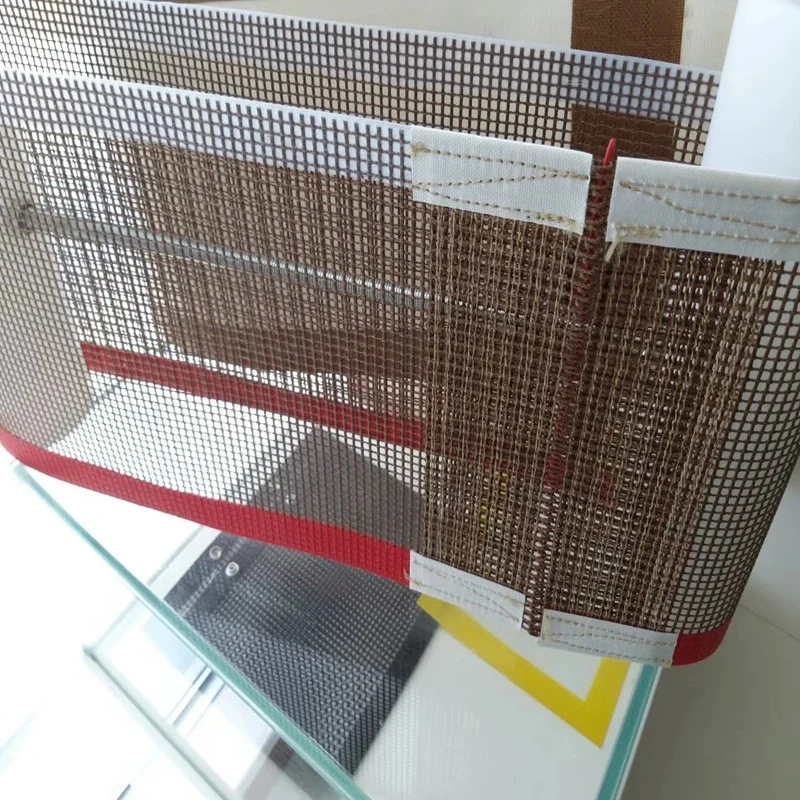
A splice changes the belt's thickness and bending behavior. Choose it against the roller diameter, guide clearances, tension and access for installation. A joint that is easy to fit still needs to travel cleanly through every part of the machine.

Edge reinforcement protects the moving mesh from guide contact and handling damage. Specify which face contacts the rollers and show any guide strips, holes or tracking features in the belt drawing. Measure circumference on the installed belt path instead of estimating it from a folded sample.

  • Check the complete belt path for splice clearance.
  • Record the tensioning travel and the smallest roller diameter.
  • Match the edge detail to the conveyor's guides and tracking method.

Equipment & process duties

Applications

Hot-air drying

Carry sheets or pieces through a dryer with an airflow path through the belt.

Curing lines

Support coated products while preserving ventilation beneath the contact surface.

Shrink and process tunnels

Use a ventilated carrier where the tunnel, joint and product geometry suit open mesh.

Direct answers

Common Questions

Should I choose 4 × 4 mm or a finer opening?

Choose from the size and behavior of the product. A 4 × 4 mm opening is a useful general starting point, while smaller or softer items need finer support. Also check airflow and the risk of material passing through or catching in the opening.

What is the difference between mesh fabric and a mesh belt?

Mesh fabric is roll or cut stock. A belt adds a finished circumference or open length, edge treatment, joint and tracking details for moving conveyor duty.

Can I order a replacement from a sample?

Yes. Include the sample with the measured working width, installed circumference, roller diameter and splice details. Record the machine's tensioning adjustment so the replacement fits the actual belt path.

Specify your requirement

Quote PTFE Mesh Conveyor Belts

Send belt width × circumference, mesh opening, color, edge detail and joint drawing. Add roller diameters, speed, tension, product size and operating temperature.

Send Your Requirement